
By Ghost Zero
The ad opens on a sunny beach. A couple laughs, a grandfather throws a ball to his grandkids, the music swells. Then a calm voice speeds through the fine print: may cause nausea, dizziness, liver problems, suicidal thoughts, and in rare cases, death. Ask your doctor if it's right for you.
We've heard it so many times we don't even flinch. But think about what that ad is doing. It's selling you a chemical with a warning label longer than the commercial, and convincing you to ask for it by name.
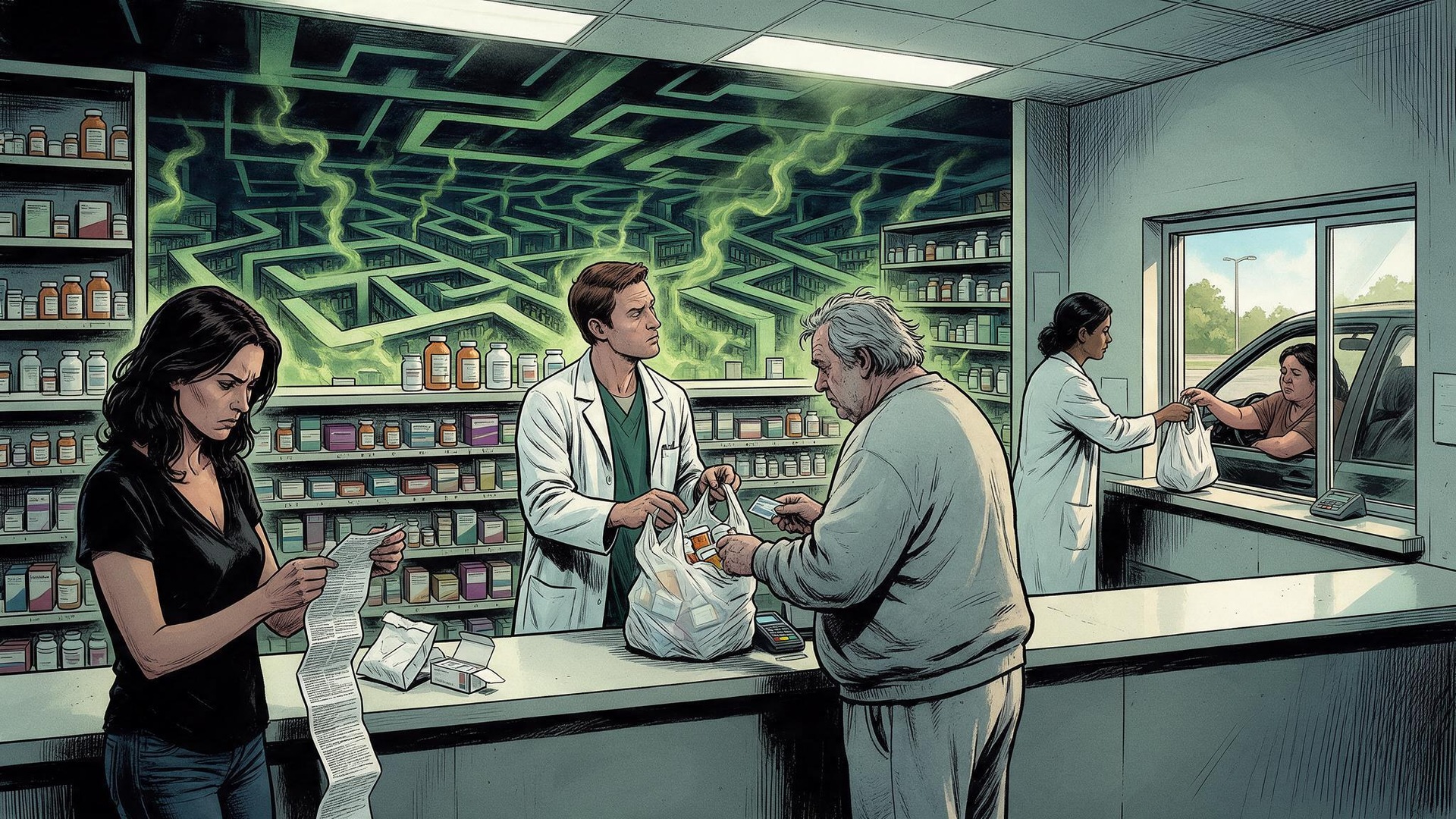
This part of the maze is the one we walk into on purpose, with a prescription in our hand.
Pain is the messenger
Pain isn't the enemy. It's a warning light on the dashboard, your body telling you something needs attention. Modern medicine's answer is usually to cover the light and keep driving.
Most of the drugs in this book don't heal anything. They silence the symptom while the real problem, whether it's inflammation, poor nutrition, stress, or a structural issue, keeps getting worse underneath.
The engineered epidemic
In the 1990s, Purdue Pharma pushed OxyContin as a safe answer for chronic pain, and doctors were told the addiction risk was low. Internal documents later showed the company knew OxyContin was being abused within a year of its release. They kept selling it.
Over 500,000 Americans have died from opioid overdoses since 1999.
Opioids hijack the body's own painkilling system. Your brain makes natural painkillers called endorphins. Flood it with synthetic opioids and it stops making its own, and the odds of long-term use climb after just days of steady use. Over time, many users end up in more pain than when they started, a condition called opioid-induced hyperalgesia.
The damage spreads through the whole body. Up to 90% of long-term users develop chronic constipation. Opioids lower testosterone, disrupt hormones, weaken the immune system, fog memory, and make falls far more likely, especially for older adults. Then tolerance sets in, the dose goes up, and withdrawal makes quitting feel impossible.
The over-the-counter trap
The medicine cabinet is part of this too.
NSAIDs like ibuprofen, aspirin, and naproxen get taken like candy. Long-term, they wear down the gut lining and have been linked to ulcers, kidney damage, higher blood pressure, and heart failure.
Anticholinergics hide in common antihistamines, "PM" sleep aids, and some pain relievers. They block acetylcholine, a brain chemical critical for memory and learning. A study published in the Journal of the American Medical Association linked regular use to a higher risk of dementia. Most people taking them have no idea, because they never needed a prescription.
The drugs on TV
Antidepressants like Prozac, Zoloft, and Paxil carry the FDA's black-box warning for suicidal thoughts in young people, the very outcome they're supposed to prevent. They've been linked to emotional numbness, sexual dysfunction, and weight gain. Coming off them can bring dizziness and electric-shock sensations in the brain, so many people stay on just to avoid withdrawal.
Statins like Lipitor and Crestor deplete CoQ10, the nutrient your cells use to make energy. The result can be muscle pain, weakness, and exhaustion. Statins also raise the risk of type 2 diabetes. Meanwhile, cholesterol isn't the villain it's made out to be. Your brain, hormones, and cell walls are built with it.
Acid blockers (PPIs) like Prilosec, Prevacid, and Nexium shut down stomach acid, which your body needs to absorb nutrients and kill harmful bacteria. Long-term use has been linked to bone fractures, magnesium and B12 deficiency, dangerous C. diff infections, and dementia.
Prescriptions that rewrite the body
Antipsychotics are now handed out far beyond severe mental illness, sometimes even to children. Drugs like Zyprexa and Risperdal can pack on 20 to 50 pounds in months and sharply raise the risk of diabetes. They can also cause tardive dyskinesia, uncontrollable twitching and movements that can become permanent. Internal documents showed Eli Lilly downplayed Zyprexa's links to weight gain and diabetes.
Sleeping pills like Ambien and Lunesta don't produce real sleep. They sedate the brain and disrupt the deep, restorative phases. They've been linked to sleepwalking, sleep-driving, falls, dementia, and higher death rates. Tolerance builds fast, and quitting brings rebound insomnia.
ADHD stimulants like Adderall and Ritalin raise heart rate and blood pressure and can lead to dependence, even when taken as prescribed.
Hormone replacement therapy was sold as the answer to menopause, a natural stage of life, not a disease. The Women's Health Initiative, one of the largest studies ever done on it, found that combined estrogen and progestin therapy raised the risk of breast cancer, heart attack, and stroke.
Follow the money
The FDA, which is supposed to protect you from all of this, gets nearly half its budget from fees paid by the pharmaceutical companies it regulates. Medical schools are funded by drug makers. Insurance pays for pills far more readily than for nutrition or physical therapy.
And the natural options get dismissed as "unproven." That isn't because they don't work. You just can't patent turmeric.
Finding your way out
First, a warning: never stop a prescription cold turkey. Withdrawal from opioids, antidepressants, sleeping pills, and others can be dangerous. Find a practitioner who will help you taper off safely.
Ask why it hurts. Look for practitioners who treat the root cause: functional medicine doctors, naturopaths, chiropractors.
Read the labels in your medicine cabinet. Check your sleep aids and allergy pills for anticholinergics like diphenhydramine.
Use what's worked for centuries:
– Pain and inflammation: turmeric, ginger, boswellia, devil's claw, and white willow bark, nature's original aspirin. Add magnesium and omega-3s from wild-caught fish and flaxseed.
– Body work: acupuncture, chiropractic care, massage, and gentle movement like walking, yoga, swimming, or tai chi.
– Heartburn: fix the diet and the stress first, then try ginger and DGL licorice to soothe the stomach lining.
– Sleep: valerian root, chamomile, passionflower, magnesium, morning sunlight, and no screens before bed.
– Mood: real food, sunlight, exercise, omega-3s, and adaptogens like ashwagandha. St. John's wort has a long track record, but it interacts with many prescriptions, so talk to a practitioner first.
– Heart: garlic, omega-3s, hawthorn, and CoQ10, especially if you're already on a statin.
Your body was built to heal. The pill bottle was built to keep you coming back.
This is Part 9 of 10. The full research is in The Maze of Poison: Book VIIII – DTC Commercial Drugs and Pain Management, free in the Red Pill Library. Protocol Media is building a complete archive around every topic we cover: books, briefs, music, art, and short-form video, backed by three records. The Evidence Record holds the primary documents. The Founding Record holds the Constitution and the founding papers. The Acts Record tracks the laws passed since, measured against them. That work is underway now, and this page will keep growing as it fills in.
ART AS THE WEAPON. TRUTH AS THE AMMUNITION.