
By Ghost Zero
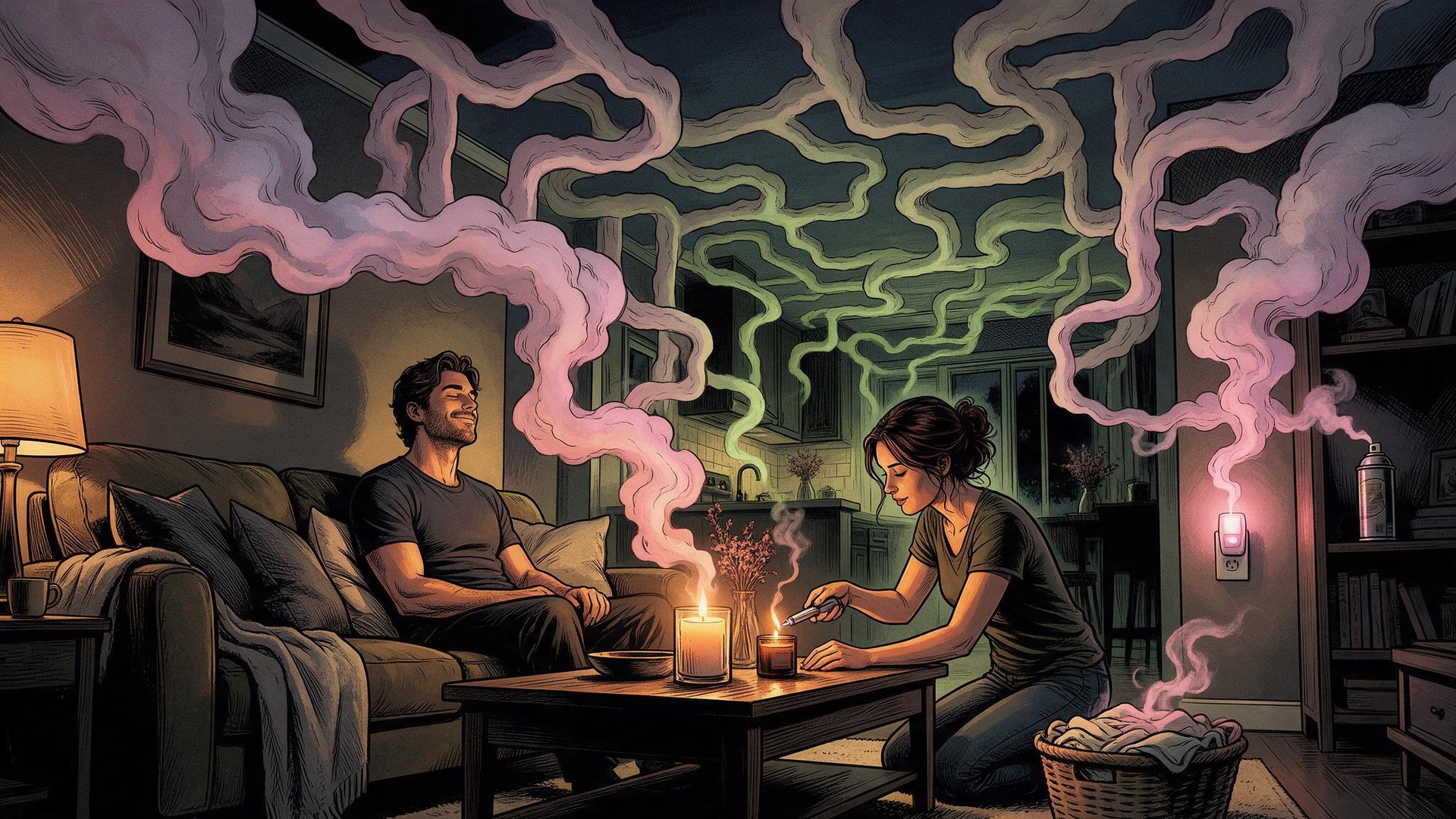
Walk into almost any home in America and you can smell it before you see a thing. A plugin humming by the couch. A candle on the kitchen counter. Laundry that smells like a "spring meadow" no one has ever stood in.
We have been taught that this is what clean smells like. It isn't. Clean has no smell at all.
What you are smelling is a cloud of chemicals, and almost none of them are on any label.
One word, hundreds of chemicals
Under trade secret laws, companies do not have to list the individual chemicals that make up a scent. They print one word, "fragrance" or "parfum," and that single word can stand in for hundreds of synthetic compounds. Many of them have never been tested for longterm safety.
In 2010, the Environmental Working Group tested fragrance products and found an average of 14 secret chemicals per product that were not on the label. Some of them are linked to hormone disruption, respiratory problems, and cancer.
The industry largely polices itself. If a bottle says "fragrance" and nothing more, assume it is hiding something.
What makes the scent last
A scent that fades in 10 minutes doesn't sell. So the industry adds chemicals to make it cling.
Phthalates are the most common. They make fragrance linger on your clothes, your skin, and in the air. They are also endocrine disruptors, linked to reproductive problems and developmental issues in children. Studies have found phthalates in the urine of nearly every American tested.
Then there are synthetic musks, with names like galaxolide and tonalide. They are engineered not to break down, and they don't. They have been found in human fat tissue, umbilical cord blood, and breast milk. Wastewater plants are not built to remove them, so after every load of laundry they wash down the drain and into the rivers.
The candle on the counter
Most candles are made from paraffin wax, a byproduct of petroleum refining. When paraffin burns, it releases toluene and benzene, and benzene is a known carcinogen. Add synthetic fragrance and dye to the wax, and you are lighting a small chemical fire in your living room every evening.
Air fresheners, plug-ins, and scented sprays release volatile organic compounds, or VOCs, into the air you breathe. They cause headaches, dizziness, and respiratory irritation. The EPA has ranked indoor air pollution among the top 5 environmental risks to public health.
The air inside your home can be more polluted than the air outside, and the products sold to "freshen" it are a big part of why.
Trained to crave it
None of this is an accident. From the baby shampoo to the hospital linens, we are conditioned from birth to believe that if something doesn't smell like a lab, it isn't really clean.
Over time, strong synthetic scents dull your natural sense of smell, so you need stronger ones to notice anything at all. Many people who quit get headaches and irritability for the first few days. Then something changes. The nose resets, and the faint smell of clean cotton, fresh air, or rain comes back.
Finding your way out
Start with the label. If it says "fragrance" or "parfum" and nothing more, put it back.
Choose fragrance-free, or products that disclose every ingredient, including what makes up the scent. Certifications like MADE SAFE screen products for known harmful chemicals.
Then swap the worst offenders one at a time:
Dryer sheets: use wool dryer balls with a few drops of real essential oil.
Fabric softener: use a splash of white vinegar in the rinse.
Detergent: use castile soap or a plant-based, fragrance-free detergent.
Paraffin candles: use 100% beeswax or 100% soy, unscented or scented with essential oils.
Air freshener: simmer orange peels, cinnamon, and cloves on the stove, set out a box of baking soda, and open a window.
Your home does not need to smell like a tropical paradise. It needs to smell like nothing.
This is Part 4 of 10. The full research is in The Maze of Poison: Book IV – Aromatic and Household Fragrances, free in the Red Pill Library. Protocol Media is building a complete archive around every topic we cover: books, briefs, music, art, and short-form video, backed by three records. The Evidence Record holds the primary documents. The Founding Record holds the Constitution and the founding papers. The Acts Record tracks the laws passed since, measured against them. That work is underway now, and this page will keep growing as it fills in.
ART AS THE WEAPON. TRUTH AS THE AMMUNITION.