
By Ghost Zero
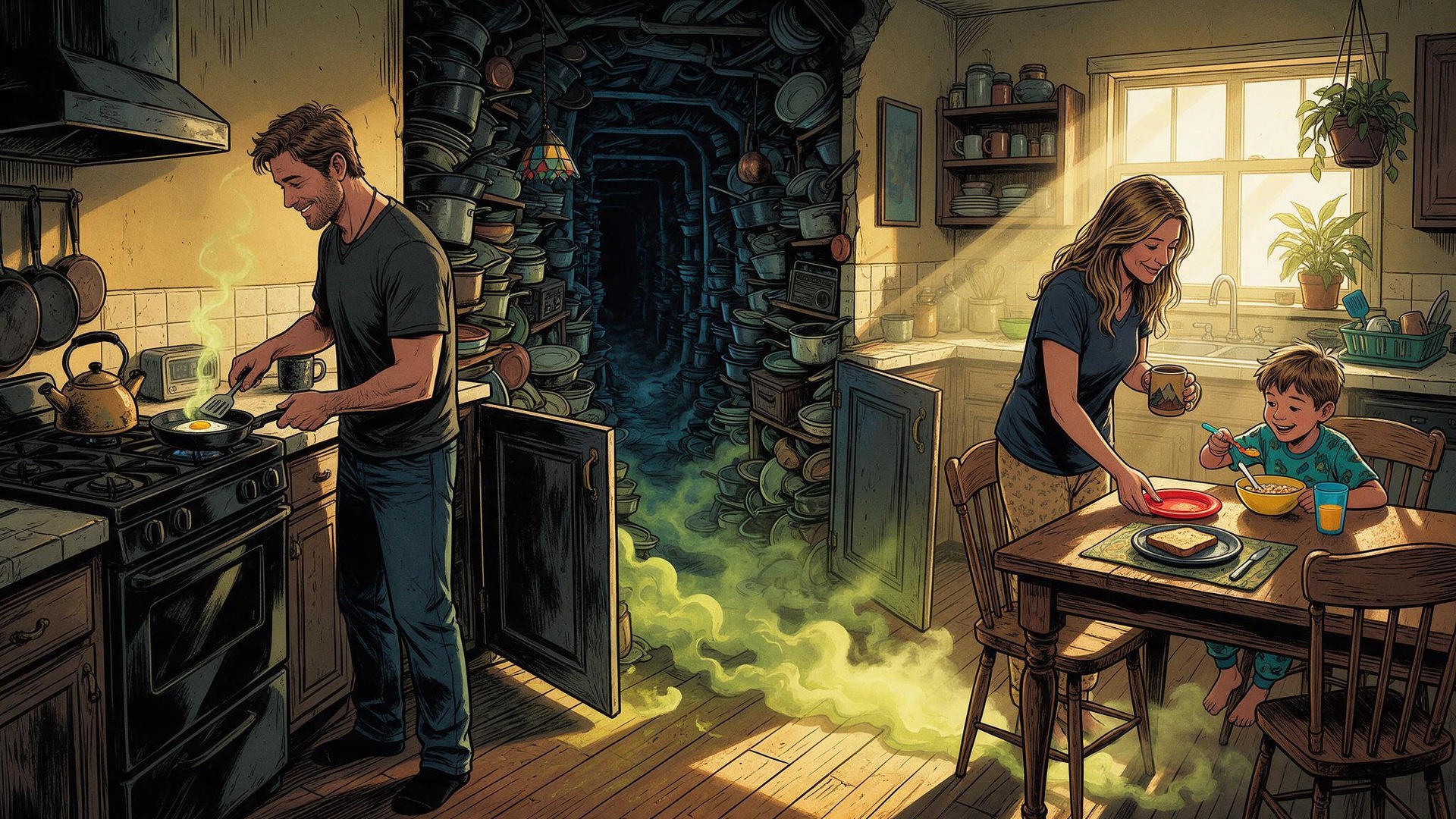
Saturday morning. Eggs slide across a nonstick pan like it's ice. Coffee goes into a handpainted mug from a little shop on vacation. The kids get breakfast on bright plastic plates that can't break no matter how many times they hit the floor.
Everything you cooked was clean. Organic eggs, good coffee, fresh fruit. What you cooked it in and served it on is another story.
This part of the maze sits in the kitchen cabinet, and it touches every meal you eat.
The pan that does the work for you
Nonstick pans are coated with PTFE, sold for decades under the name Teflon. At around 500°F, PTFE starts to break down and release toxic fumes. That sounds high, but an empty pan preheating on medium-high can get there. The fumes cause flu-like symptoms in people, nicknamed "Teflon flu," and they can kill a pet bird in the next room.
The bigger problem was how the coating was made. For years, PTFE was manufactured with PFOA, a forever chemical that doesn't break down in the environment or the body.
PFOA has been linked to kidney and testicular cancer, thyroid disease, high cholesterol, and high blood pressure in pregnancy.
DuPont, the company behind Teflon, knew as early as the 1960s that PFOA was toxic to lab animals. They kept using it for decades, dumped it into rivers, and hid what they knew from the public and their own workers. It took lawsuits to force it out.
"PFOA-free" is not PFAS-free
So the industry swapped PFOA for chemicals like GenX and printed "PFOA-free" on the box. GenX is part of the same family of more than 9,000 PFAS chemicals, and research has found it causes many of the same problems, including liver damage and immune suppression.
These chemicals leach into food, especially once the pan is scratched or overheated, and they can take years to leave your body. Studies have found PFAS in the blood of nearly every American tested. If your nonstick pan is scratched or peeling, it's feeding you the coating.
The metals in the pot
Aluminum is cheap, light, and reactive. Cook tomatoes, citrus, or vinegar in an uncoated aluminum pot and the metal leaches into the meal. Researchers have long suspected a link between aluminum buildup in the brain and Alzheimer's. Aluminum has no role in the human body, and there's no reason to cook in it.
Cheap ceramic cookware and nonstick pans can also carry cadmium, a known carcinogen that builds up in the kidneys over years. It mimics estrogen and damages the kidneys slowly, long before anyone thinks to blame the pot.
The plate, the cup, the bowl
The table has its own hazards.
That cheerful hand-painted mug or plate may be colored with glazes that contain lead and cadmium. Lead is a neurotoxin that lowers IQ and causes developmental delays in children. These metals leach out fastest when the piece is chipped or cracked, or when it holds something acidic like coffee, juice, or tomato sauce. A lot of this tableware comes from overseas, where testing is loose.
Plastic tableware brings BPA and phthalates, the same endocrine disruptors from earlier in the maze, and they migrate faster when the plastic is hot, old, or scratched.
Then there's melamine, the "unbreakable" plastic in colorful kids' plates and bowls. Heat, especially the microwave, can make it migrate into food, and melamine has been linked to kidney stones and kidney damage. In 2008, melamine-tainted baby formula in China killed 6 infants and sickened about 300,000. Many families still serve their kids dinner on melamine plates every night.
Finding your way out
Your grandmother had the answer, and it's still sitting in antique stores.
Cast iron: a seasoned skillet becomes naturally nonstick and gets better with age.
Stainless steel: choose 18/10 or 18/8 grade, which leach less nickel and chromium.
Carbon steel and glass: borosilicate glass is great for baking and storage.
Ceramic: buy only from brands with third-party testing for lead and cadmium.
The table: use glass, stainless steel, plain white or lead-free tested ceramics, and wood or bamboo for kids.
Retire the risks: throw out scratched nonstick pans, chipped painted dishes, and old plastic.
Never microwave in plastic or melamine. Move the food to glass first.
Start with the pan you use every morning and the plates your kids eat from every night.
This is Part 6 of 10. The full research is in The Maze of Poison: Book VI – Cookware and Tableware, free in the Red Pill Library. Protocol Media is building a complete archive around every topic we cover: books, briefs, music, art, and short-form video, backed by three records. The Evidence Record holds the primary documents. The Founding Record holds the Constitution and the founding papers. The Acts Record tracks the laws passed since, measured against them. That work is underway now, and this page will keep growing as it fills in.
ART AS THE WEAPON. TRUTH AS THE AMMUNITION.