
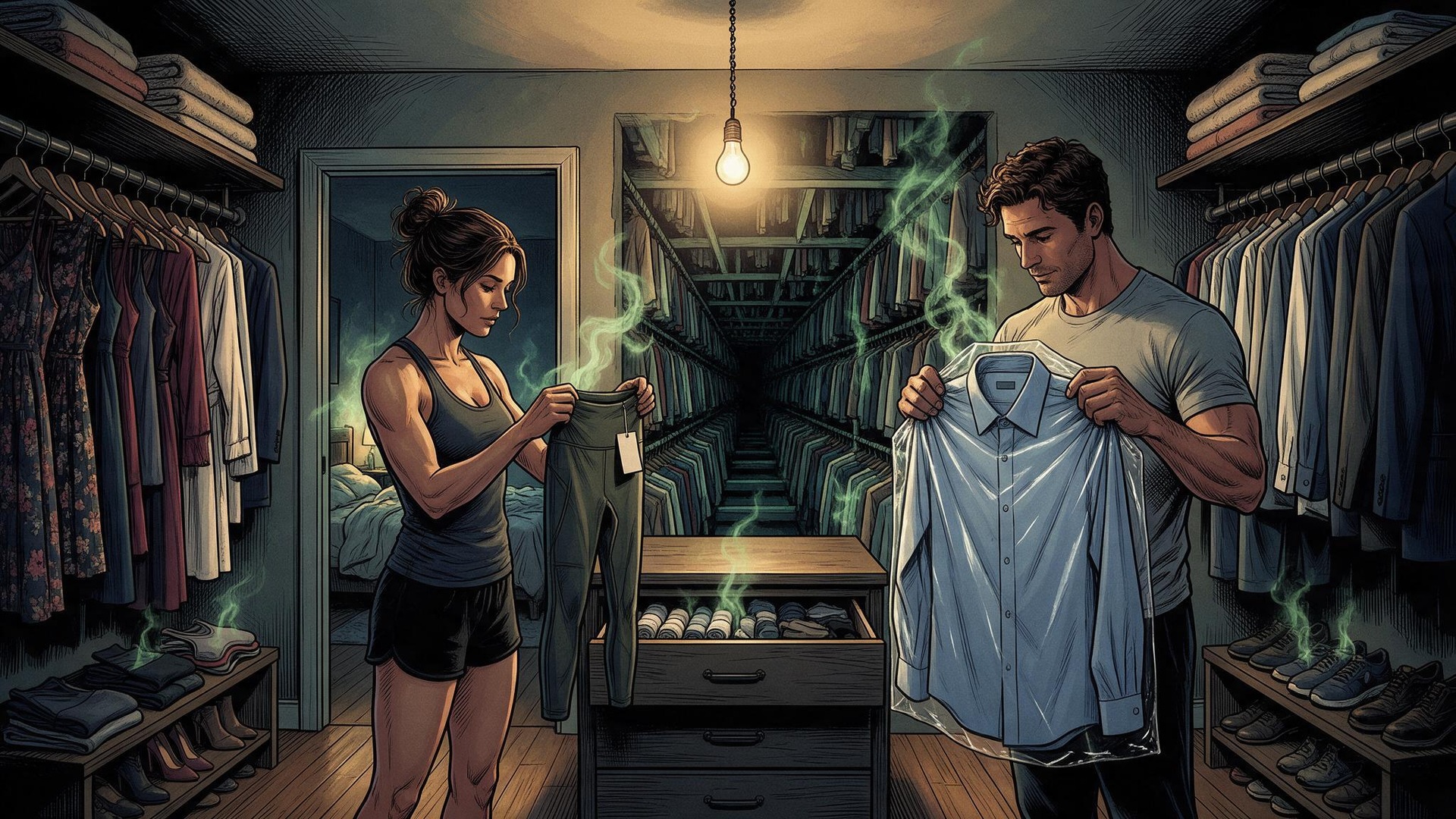
By Ghost Zero
Unfold a brand-new dress shirt, the kind sold as no-iron. Crisp collar, sharp creases, not a wrinkle anywhere, straight out of the package.
That perfection did not come from the cotton. It came from a chemical finish. And you are about to wear it against your skin for the next ten hours.
The clothes in your closet and the sheets on your bed are rarely just cotton, wool, or silk anymore. They are treated, finished, and engineered. The good news is that the industry tells you exactly what it added. It just tells you in code, printed right on the tag.
"Wrinkle-free" means formaldehyde
No-iron shirts, wrinkle-free sheets, and crisp school uniforms are often treated with formaldehyde resins to keep them looking fresh.
Formaldehyde is a known carcinogen, the same chemical used in embalming fluid. Shortterm exposure shows up as rashes, coughs, and fatigue. Long-term exposure has been linked to respiratory problems, allergic reactions, and a higher risk of nasopharyngeal cancer.
The convenience is the trap. The less you have to iron it, the more likely it was treated.
"Stain-resistant" means forever chemicals
That stain-resistant tag on your couch, your rain jacket, or your kids' school pants is code for PFAS and related compounds, the chemicals known as forever chemicals.
They earned the name. They do not break down in the environment, and they build up in the human bloodstream. Studies have tied them to thyroid disease and hormone disruption.
Synthetic fabrics like polyester, nylon, and acrylic are made from petroleum, and they can carry PFAS along with another class of endocrine disruptors, nonylphenol ethoxylates.
"Flame retardant" means it is in the dust
Flame retardants like PBDEs are applied to everything from children's pajamas to office chairs to mattresses. They do not stay put. They migrate out of the fabric and into the dust in your home, where you breathe them in.
They have been linked to developmental delays in children, hormone disruption, and cancer. They remain everywhere because of outdated fire-safety rules that weigh a theoretical risk of flames above a proven risk to health.
Your grandparents did not sleep on mattresses treated with flame retardants. You probably do, every night.
Natural on paper
Even the fabrics that sound safe need a second look.
Rayon is marketed as natural because it starts as wood pulp. Turning that wood into fabric takes a chemical bath of caustic soda and carbon disulfide, a neurotoxin. Factory workers exposed to it have reported chronic headaches, memory loss, and even psychosis.
Conventional cotton is one of the most pesticide-heavy crops on the planet. And a fabric labeled organic can still be processed with harsh chemicals during manufacturing unless it carries a real certification.
Finding your way out
Read the tag for substance, not just size. Treat the convenience words as warnings:
wrinkle-free, no-iron, stain-resistant, water-repellent, flame-retardant.
Look for real certifications. GOTS, the Global Organic Textile Standard, prohibits toxic dyes, formaldehyde, and heavy metals. OEKO-TEX tests finished textiles for harmful substances.
When you replace something, replace it with what people wore for thousands of years:
cotton that is actually organic, linen, hemp, wool, and silk. Start where you spend the most hours, which is your bed and the clothes you sleep in.
This is Part 3 of 10. The full research is in The Maze of Poison: Book III – Fabrics and Textiles, free in the Red Pill Library. Protocol Media is building a complete archive around every topic we cover: books, briefs, music, art, and short-form video, backed by three records. The Evidence Record holds the primary documents. The Founding Record holds the Constitution and the founding papers. The Acts Record tracks the laws passed since, measured against them. That work is underway now, and this page will keep growing as it fills in.
ART AS THE WEAPON. TRUTH AS THE AMMUNITION.