
By Ghost Zero
Before September 11, 2001, two productions put events eerily similar to it on screen: the TV series The Lone Gunmen and the film The Siege.
I am not going to tell you what that means. People have argued about it for years. What I want you to see is the pattern it belongs to.
Put it on the screen first
In 1997, Gattaca showed a society where genetic discrimination is not just possible, it is the system.
In 1998, Enemy of the State turned NSA-style mass surveillance into an action thriller, while the infrastructure for mass spying was already being built.
In 2002, Minority Report showed police arresting people for crimes they had not committed yet.
In 2005, V for Vendetta showed a government using a fabricated virus to justify tyranny.
In 2011, Contagion showed lockdowns, media-driven panic, and a frantic race for a vaccine. In 2020, the world lived it.
Black Mirror showed a world run on social scores. In 2017, The Circle showed every person's behavior monitored and rated.
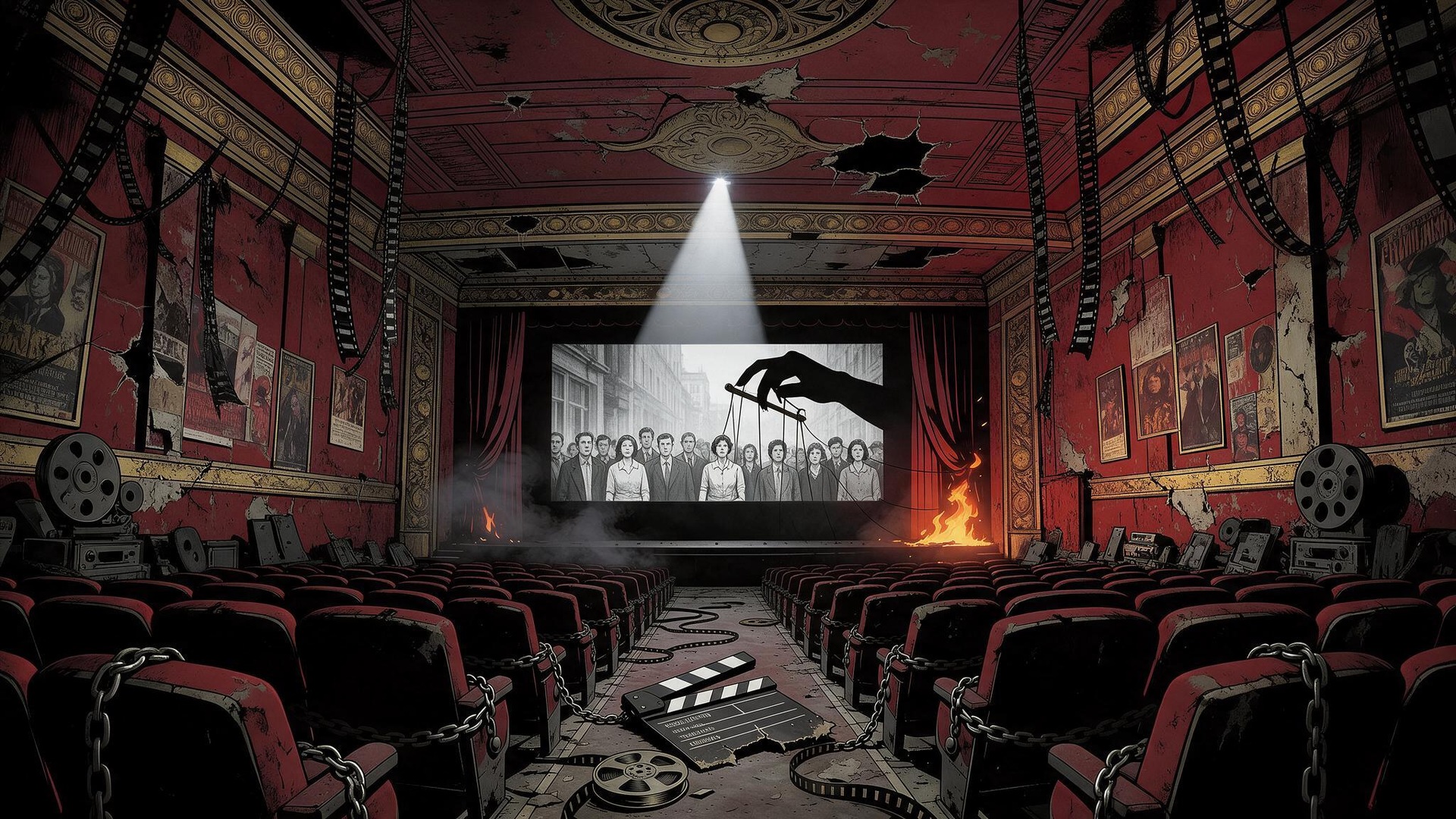
Pre-crime. Mass surveillance. Pandemic lockdowns. Social scores. Genetic ranking. Every one of them was on a screen in front of millions of people before it showed up in real life.
Watch how it happens in stages. The Terminator made the merger of man and machine a horror story. The Matrix and Transcendence made it dangerous but tempting. By the time Upgrade and Black Mirror came along, enhancing the body with technology looked inevitable, even desirable. Unthinkable, then possible, then normal.
Psychology has a name for why this works: the mere exposure effect. The more often you see an idea, the more acceptable it becomes. The first time, it shocks you. The fifth time, it is familiar. By the time it arrives for real, it feels like something you always knew was coming.
That is not creativity. That is conditioning.
Who else was in the writers' room
The obvious question is who decides what ends up on that screen. Part of the answer goes back to World War II.
The Office of Strategic Services, the agency that became the CIA, saw film as a propaganda tool and worked with Hollywood to shape public opinion. That relationship never ended. It just grew up.
Today the CIA runs an Entertainment Industry Liaison Office. It reviews scripts and pushes for changes that put the agency in a good light. Films that play along get access to consultants, locations, and even classified information. Zero Dark Thirty, the story of the hunt for Osama bin Laden, was given that kind of access.
The Pentagon runs its own entertainment liaison office. If a studio wants jets, aircraft carriers, bases, or soldiers, the military will provide them in exchange for script approval. Transformers and Iron Man both received Pentagon support. Top Gun: Maverick came with Pentagon-approved scripts and advisers on set, making sure the Navy looked as heroic as possible.
These are not small art films. These are blockbusters, with government agencies helping decide what goes in them.
Why it works
You argue with a politician. You argue with a news anchor. You argue with a stranger online. You do not argue with a movie.
A story gets past the guard you keep up everywhere else. You are relaxed. You are invested in the characters. You are there to feel something, not to check facts. Whatever the story treats as normal, you take in as normal.
No mind control required. Just repetition, delivered by people you would never trust if they handed you the same message directly.
Watching with your eyes open
I am not telling you to stop watching movies. I am telling you to watch them like someone who knows who else was in the room.
Ask who helped make it and what they got in return. Notice what a film treats as normal, or as inevitable. Who is the real hero? Is violence being sold as justice? Is tyranny being repackaged as order? Then ask who benefits if you believe it.
The story was always written by someone. The question is who else was holding the pen.
This is Part 1 of 3. The full research is in Scripted Reality: The Hidden Hand of Cinema and the Art of Predictive Programming, free in the Red Pill Library, and the song SCRIPTED REALITY is on Red Pill Symphony.
ART AS THE WEAPON. TRUTH AS THE AMMUNITION.